
Origin Story
I'm using artificial intelligence to create narratives that explain the warning signs in systems that become overly complex, overly trusted, and overly expedited: factors that prevent us from recognizing problems before it's too late.
How it started
I've mostly focused on creating software and interfaces for my AI projects. That work had value, but it was narrow. I wanted to apply AI to researched stories with voice, visuals, music, motion, and enough production discipline that the result did not feel disposable.
I didn't set out to create a channel that's just for fun with AI. I wanted a production system that could get serious documentary stories out faster than a traditional manual workflow could manage.
Why I chose "system failures"
System failures are fascinating because they're both a part of our history and something we're dealing with right now. They impacted specific people, places, and situations due to unique technical and organizational factors. The patterns we observe aren't just from the past.
We're constantly building more systems, and we're doing it super fast. AI is becoming more integrated into and influencing software systems, tools, machines, and essential activities. By reflecting on the past, we can gain valuable insights, or we might risk living in a bubble, thinking these failures are just old news.
When I first started, I wasn't super familiar with these stories. I knew about Challenger and the Tacoma Narrows Bridge, but not the specifics. Therac-25 and the Hyatt Regency were completely new to me. As I researched, I kept finding more, and the project taught me along the way.
Created with the assistance of AI, but not solely by AI
The Cascade of Effects series bible comprises 186 episodes. Given the sheer number of episodes, the project cannot be a one-time endeavor. It necessitates a repeatable model to ensure the continuity of research, writing, production, review, and publishing. The rule was straightforward yet challenging to uphold: AI could be integrated into nearly every aspect of production, but the final product should not appear as if it was created by AI.
I am transparent about the tools utilized in the creation of the project. The Living Cover image backplates, ambient effects, my voice, and the music tracks were all generated by artificial intelligence. Furthermore, the episode assembly code was also created by AI. While these tools are undoubtedly essential, they do not constitute the primary focus of the episodes.
The primary limitation of the episodes is that AI can generate images, voiceovers, or moving frames, but it cannot fabricate evidence. This project relies on research and a script. The voiceover accurately presents the facts. A still image can be reviewed and corrected. However, generated video often introduced inaccurate motion and grossly altered details, creating plausible footage that the evidence does not support. This crossed the line in this project.
Exploring visual expressions
The initial promising direction was particle workbench development. I created an AI-assisted app with sliders that powered 3D particle simulations using open-source 3D models. The ethereal yet detailed feel of this approach was quite unexpected. A tool that would have been too expensive to develop as a side project became an instant tool for testing the direction. It also revealed the need for review points: moments to pause, examine the results, and determine if it was contributing to the project or simply becoming captivating on its own.
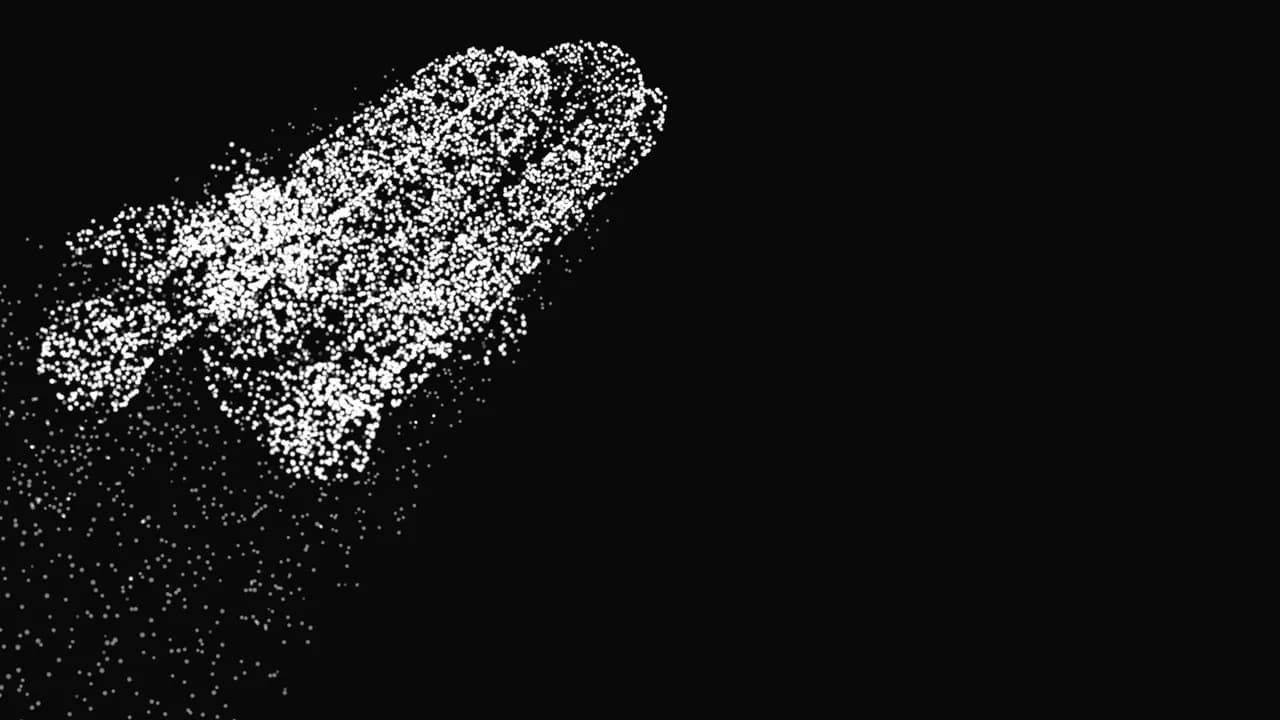
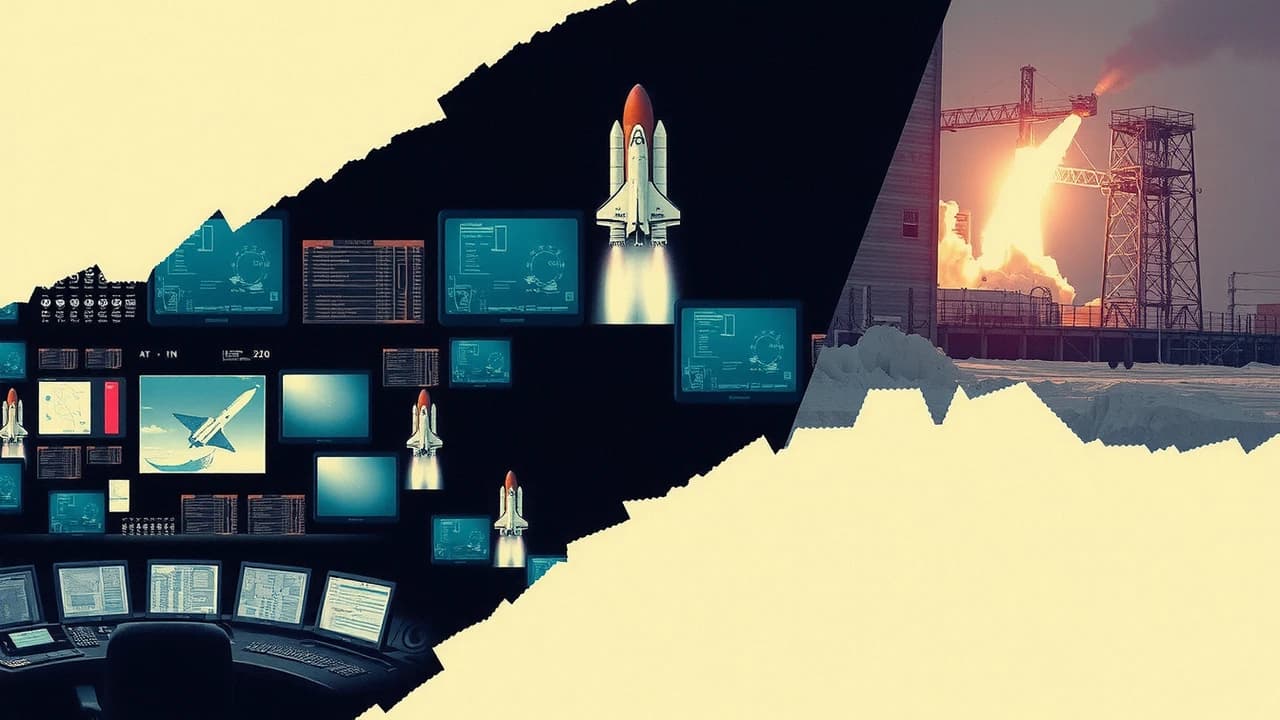
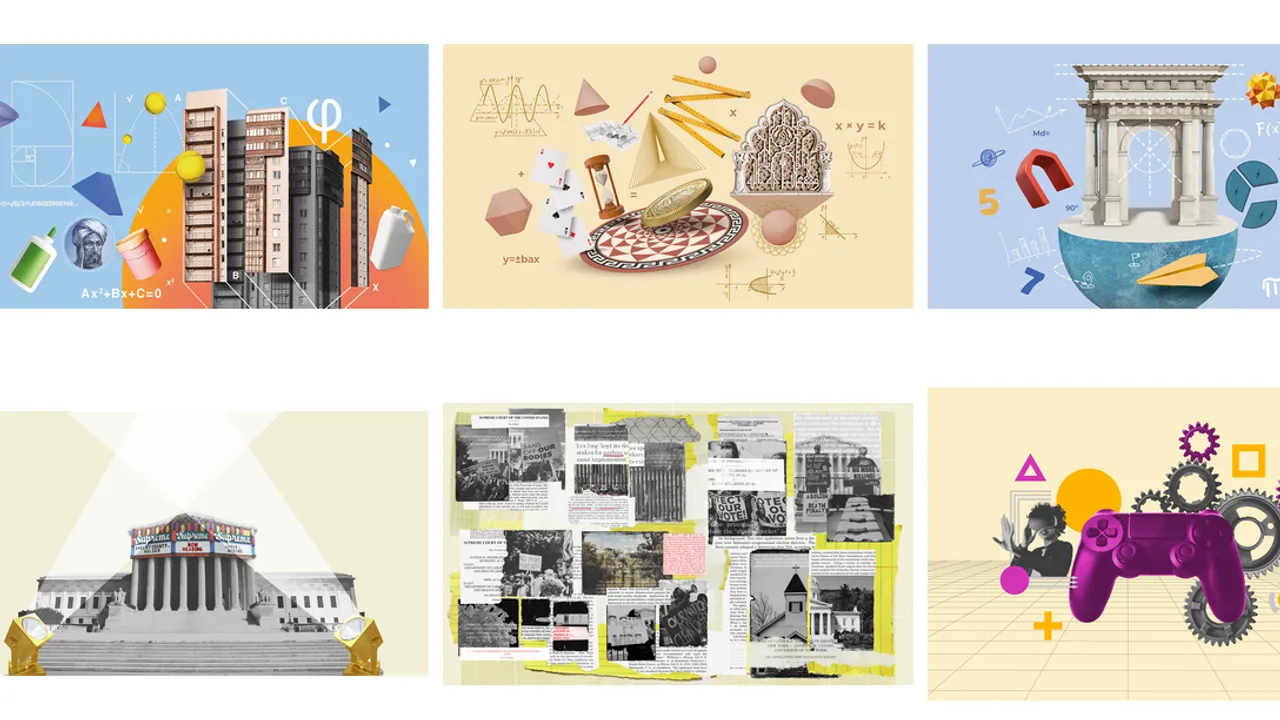
The particles, despite appearing crisp in the browser, failed to serve as an effective visual language when compressed for YouTube. This compression resulted in a significant loss of their original functionality, ultimately requiring excessive time and effort for a marginal result.
A second direction focused on AI-generated collage compositions. While visually appealing, these compositions often deviated from the original evidence. For instance, the Challenger disaster could be depicted as a sci-fi-inspired rocket-like object instead of the actual space shuttle, and large O-rings could be transformed into an unusual evidence tray of tiny rings. Furthermore, this style risked becoming overly reliant on the aesthetic of established collage artists.
Image-to-video technology, while promising, proved inefficient and cost-prohibitive. While the technology is great at creating a few seconds of motion content, the approach was insufficient to create a twenty-minute episode or scale to a channel with a substantial backlog of content.
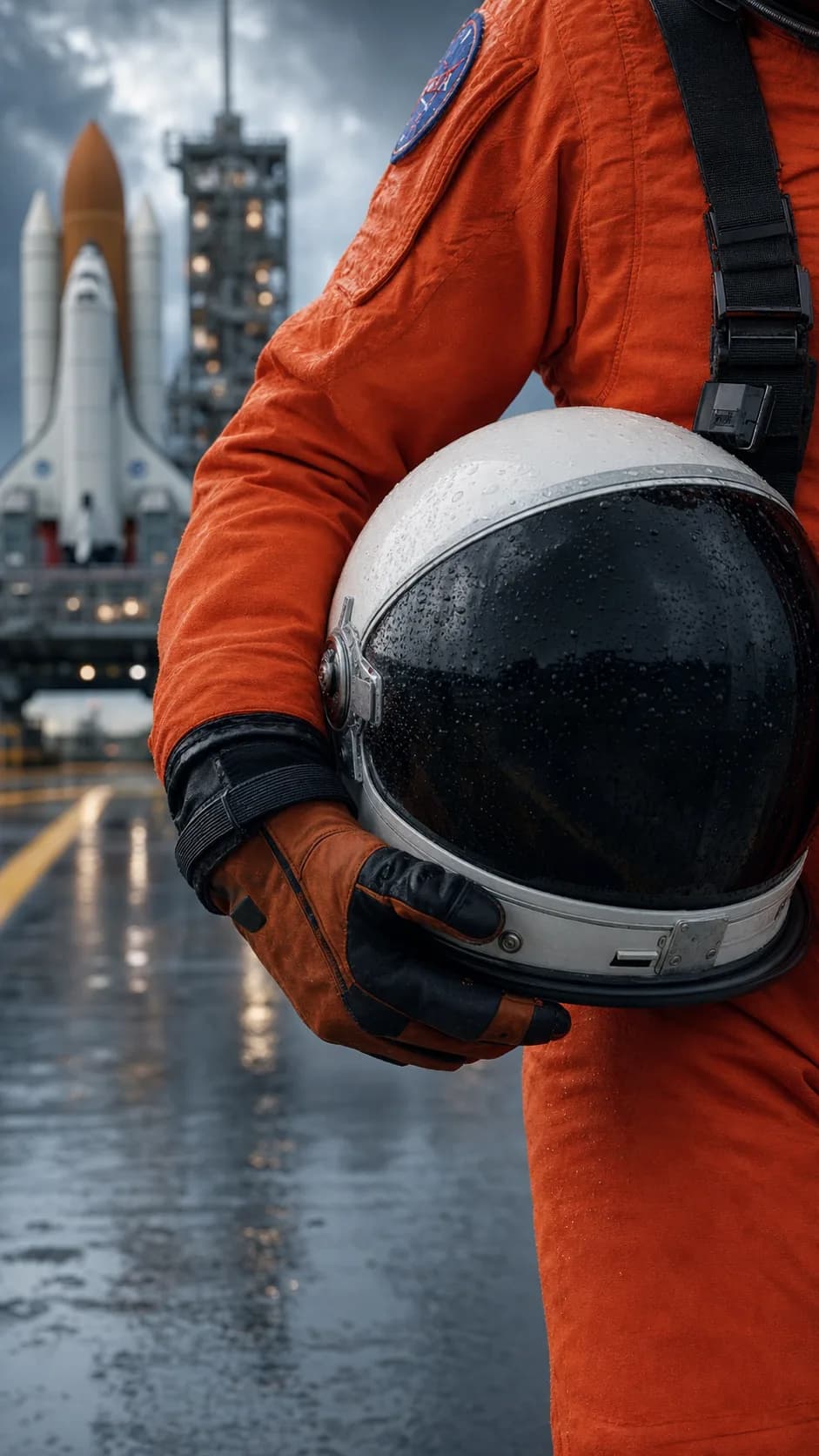
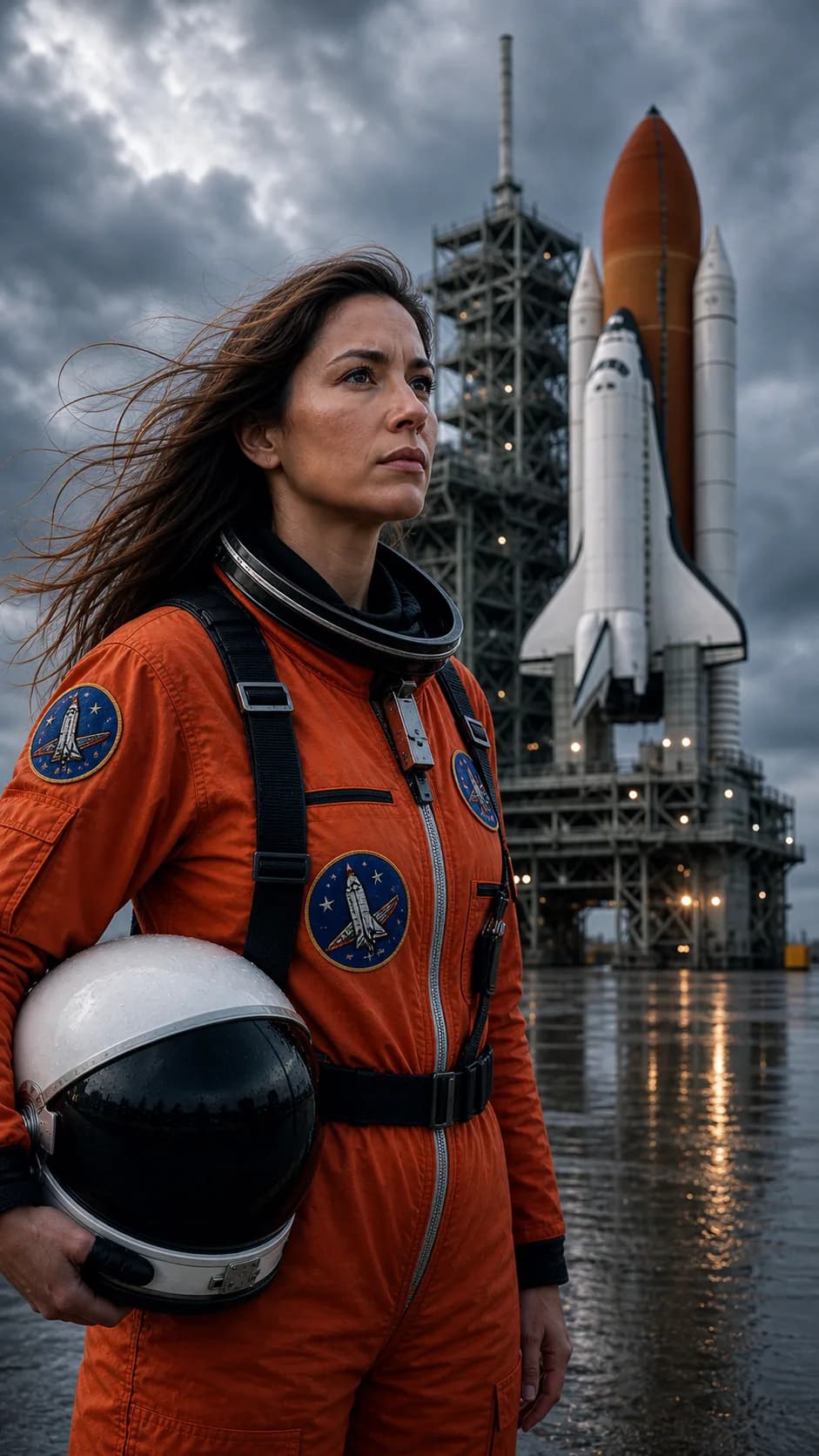
The female astronaut tests made that boundary concrete. I was not trying to create fake Challenger footage. I was testing whether a generated still could carry a researched emotional beat into motion. The stills had promise. The motion did not.
Three production lanes
Long-form episodes transformed into what I refer to as Living Covers. A Living Cover is a single, authored image that captures a frozen moment from the story. Beneath the narration, subtle, controlled motion is introduced. Atmospheric elements and lights shift and shimmer, while caption text smoothly scrolls through the composition. The frame remains still enough to allow the viewer to think without being abruptly cut off. This single image grants me composition control, making it easier to repair and mask. Additionally, code-driven motion ensures consistent rendering across delivery mediums.
YouTube Shorts videos have their own guidelines. When archival footage is compelling and the rights situation is clear, it can achieve something that generated media cannot: capture a genuine moment in time. However, this also means that Shorts cannot be mandated for every episode. Some subjects have the appropriate amount of quality source material, while others do not.
The third lane, which I like to call Ink-Lit Paper Architecture, is what makes the channel unique. It's all about paper sculptures that represent the episodes, glowing from inside like ink flowing through them. You can see this idea on the website, channel art, and gallery pieces. It's not something we use to prove anything in the episodes. If every episode were turned into a paper sculpture, the long videos would feel like stepping into a paper world instead of being based on real stories.
The phrase "Paper Architecture" originated from the music-making process. One of the song titles the AI generated was "Paper Architecture," and the lyric "fragile architecture can't hold water" lingered in my mind. Consequently, the paper collage direction was abandoned, but the signals about fragility remained.
The definition of authorship
I still hesitate to call myself an "artist" in this project, partly because AI-generated work complicates the question. I understand the dilemma: is this art, or am I merely typing prompts into a computer? I share some of that skepticism myself.
Cascade of Effects has never felt like prompt engineering. Instead, it has been more akin to directing a living media system. I set the initial premise, designed the workflow, selected what survived, rejected regressions, and determined when something constituted evidence, interpretation, or simply an intriguing failure.
I didn't directly engage with the historical evidence. Instead, I modified the system responsible for discovering, curating, and utilizing it.
If "artist" is the appropriate term, it's not because I meticulously hand-crafted every pixel. Rather, it's because I make the decisions: what to retain, what to discard, and what the generated material can represent.
Maintaining trust and good judgment
The Living Cover concept is designed to be a reflective experience rather than provocative or overstimulating. The format allows viewers to listen, comfortably read, and immerse themselves in the story. Small animated details keep the experience engaging without turning the episode into a spectacle.
I am not inclined to support Cascade of Effects in celebrating disasters or death. These narratives carry significant weight because real individuals were impacted, and we should refrain from utilizing that impact for shock value. In certain episodes, individuals are depicted, but their faces are obscured. This is intentional. We can incorporate individuals into the narrative without reducing them to mere plot devices for the audience.
By the conclusion of an episode, I aspire for the viewer to harbor confidence in the meticulous research conducted, the impartial treatment of evidence, and the compassionate consideration extended to those impacted by the narrative.
Furthermore, I aim to encourage the viewer to carry the pattern into the present. These failures were not due to a lack of sophistication in the past. Systems naturally deviate, organizations normalize risk, warning signs are disregarded, and trust is incorrectly placed on technology.
The incorrect conclusion is that we have learned our lessons from the past and confidently move on. We remain vulnerable.
Looking to the future
Cascade of Effects is constructed around historical failures, yet the concerns about the present remain in the background. The episodes don't need to pause and explicitly state that they revolve around present-day risks. The connection is already evident: the stories are being created using AI at a time when AI is becoming an integral part of the environments and machines where future failures may originate.
I frequently revisit a recurring thought: the warning signs are evident, but the disaster has yet to occur.